MESSAGES THAT LAND – Monday 14th September
When preparation makes your expert worse on camera: the 3-step fix.
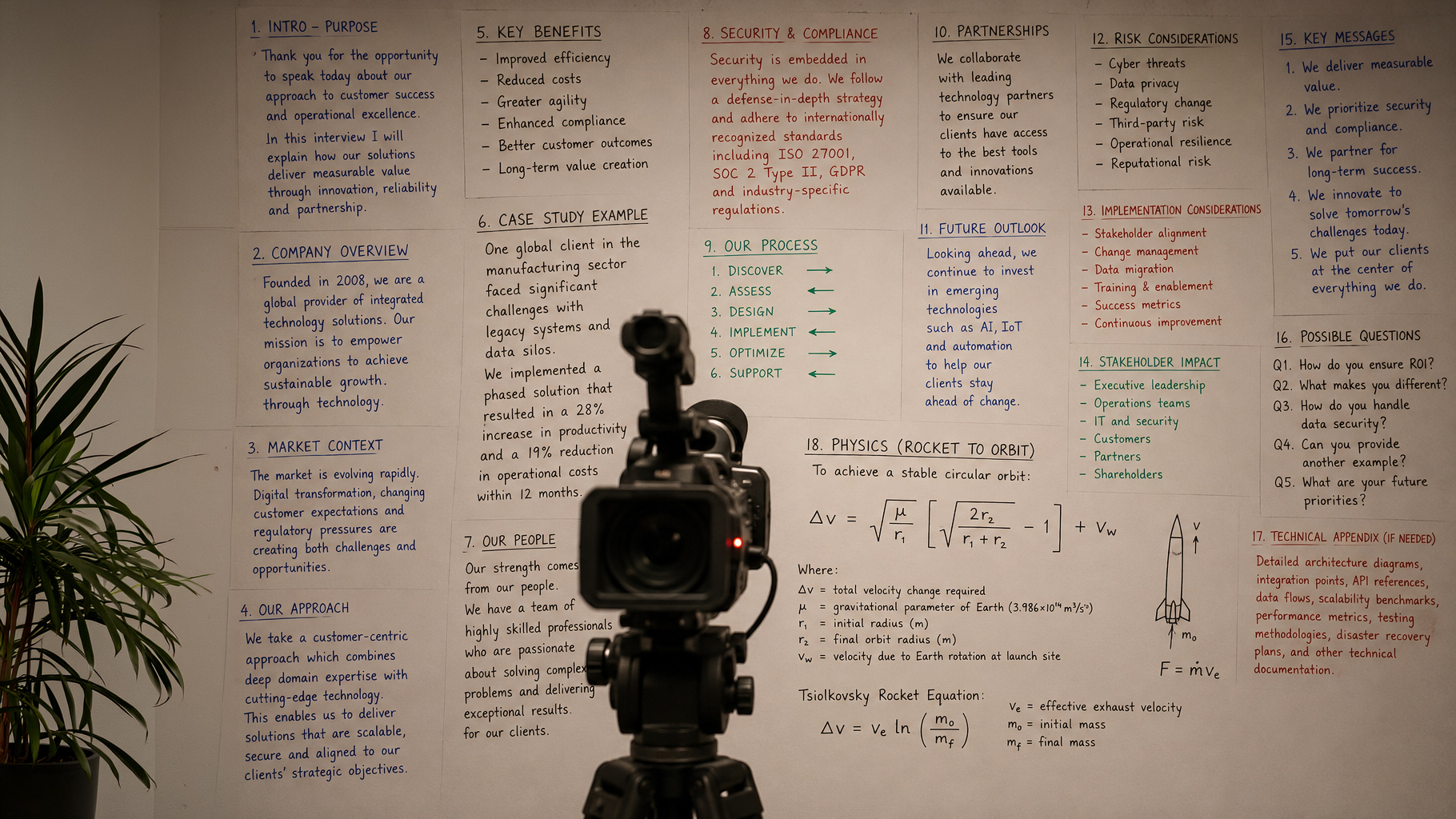
Once, I was getting ready to interview someone who had arrived very well prepared. Very well prepared.
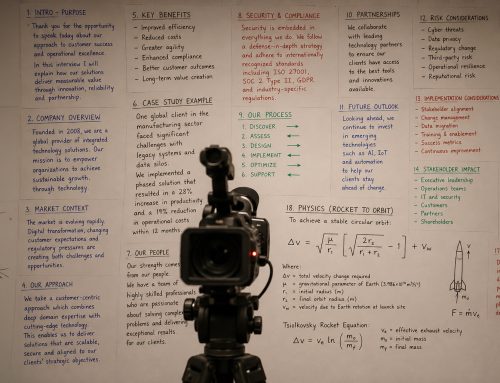
They had brought six flipchart pages of notes with them. The stand, the pages and big marker pens to add more if necessary. Six whole flipchart pages, covered with carefully thought-through word-for-word responses, points they didn’t want to forget and things that clearly mattered and had probably taken a fair bit of time to prepare.
I remember looking at those pages and thinking, Awkward! This is going to make things harder.
Not because the person had done anything wrong. Quite the opposite. They cared. They knew their subject inside out, they were representing their organisation and they wanted to come across well while staying within the regulations and guidelines of their industry. They didn’t want to forget something important, get a detail wrong or walk away afterwards thinking, I wish I’d said that.
I think most of us understand that feeling.
Someone points a camera at you and suddenly all the perfectly normal things you would say in conversation start to feel strangely important. You become aware of your hands. You become aware of your voice. You start wondering whether you’re talking too quickly. Somewhere in the back of your mind is a small but persistent voice saying, Don’t mess this up.
A well known TV newsreader quietly imparted to me one day what they called* their* persistent voice. “The itty bitty sh**ty committee”. See? Even the best in the business never fully shake it off. So… we prepare. We write things down, ask for the questions in advance and rehearse the answers in our heads. Sometimes we rehearse them so thoroughly that, by the time the camera starts rolling, we’re no longer really having a conversation at all. We’re trying to remember the conversation we planned to have.
That’s when something slightly odd can happen. The person you were chatting to five minutes earlier (Knowledgeable, interesting and relaxed) starts to disappear. Their eyes might drift for a second as they search for the next sentence. Their voice changes slightly. The natural pauses disappear. They stop reacting quite so much to the question because part of their attention is somewhere else, trying to retrieve the answer they prepared earlier.
Nothing dramatic has gone wrong. But some of the person has gone missing.
Step 1: Take the pressure off the words.
So when I see that happening, I normally take the pressure away from the words and go back to something much simpler. Who are we talking to? What do they need to understand? What does this conversation need to help happen?
That changes things because the expert no longer has to carry everything they know into one answer. They don’t have to squeeze years of experience into sixty seconds. They just need to help this particular person, watching this particular piece of content, understand the bit that matters.
Step 2: Make it “just a chat”.
Then I tell them it’s just a chat.
There is, however, a fairly important bit hidden behind those four words.
I’ve done the preparation.
Before we get anywhere near the cameras, I’ll normally have spoken at length with the Marketing Director or whoever is leading the project. I’ll know who we’re trying to reach, what we need them to understand, the important messages we need to get across and what we want the finished content to help happen.
In fact, somewhere out of sight, I’m probably the one with the copious notes.
That means the person in front of the camera doesn’t need to carry all of that responsibility. I know what we need from the conversation. I can steer towards it without making the interview feel like an interrogation or asking them to recite somebody else’s words.
If something doesn’t quite land, I’ll ask it another way. If they say something interesting, I’ll follow it. If we wander slightly off course, I’ll bring us back. And if I hear the phrase, story or explanation that I know is going to work beautifully in the finished edit, I know we’ve got it.
That’s what I mean by “just a chat”.
It’s relaxed for them because it doesn’t have to be relaxed behind the scenes.
I’ve got their back. And, importantly, I’ve got yours too.
Step 3: Take away the prepared text.
Then there is the slightly more delicate bit. If they have prepared pages of text, I usually take them away. You can sometimes feel the moment. There’s a tiny pause and a look that says, very politely, I spent quite a long time on those.
Which is fair.
But I’m not taking the preparation away because it was wasted. The thinking was useful. It has helped them organise what matters. I just don’t want those words sitting between us once the conversation starts.mThe nicest part usually comes later, when they see the edit and they get it.
They see that we were never trying to capture one flawless, uninterrupted performance. We were looking for the useful bits, the clear bits and the moments where they forgot about the camera and simply explained something in the way only they could. All within any industry regulations that apply.
That is often the point where the trust arrives.
I’ve gone back to film people again after that first session and the difference can be immediate. They sit down differently. They settle more quickly. There’s less of that little flicker of Am I doing this right? because they now understand how the process works. They know they don’t need to remember everything. They know the conversation can breathe. They know that I’m listening for what we need and that we’ll get there.
So if you have a busy expert appearing in your next video, they probably don’t need more preparation. They need the right preparation. A clear sense of who they’re talking to and what the conversation is there to achieve. Let them think about some useful examples and stories beforehand. Then let the person conducting the interview carry the burden of getting you where you need to go.
Because the aim isn’t to make your expert sound prepared. It’s to help them sound like themselves at their best.
And you might save yourself six flipchart pages in the process.
Darren
WIDEO.co.uk
Making your messages human, clear & actionable