
MESSAGES THAT LAND – Monday 21st September
Can you hold your nerve and defend the spend on your next video or podcast?
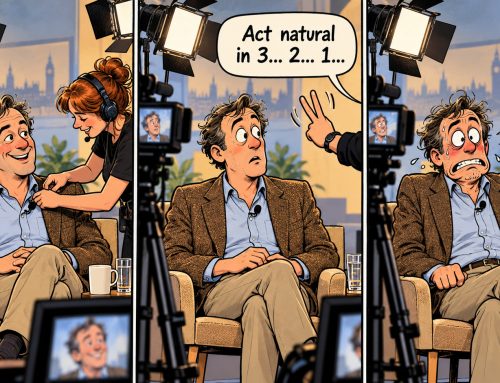
I learned this lesson fairly early in my career, as a junior a few decades ago, working on a film for a large non-governmental organisation in central London.
My CEO got involved. Their CEO got involved. Then more of their team got involved and, understandably, everyone got rather excited about the footage we were going to film.
We were in one of those impressive central London buildings that looks fantastic on camera. There were lots of ideas, lots of enthusiasm and lots of people wanting to make the most of the opportunity… and perhaps their 15 minutes of fame.
The problem was that, somewhere along the way, the thing the film was actually supposed to achieve started getting lost.
I tried to raise it, but I was junior, there were some fairly senior voices in the room, and mine wasn’t really the one being heard. So we carried on.
Then we got to the final edit and the penny dropped the atmosphere in the room became quite cold…
We had plenty of show, but not much message.
The film looked good. It just didn’t really achieve the objective we had started with. Nobody had deliberately derailed it. Quite the opposite. Everyone was trying to make the film better. But people were chipping in with ideas without keeping front of mind the one thing the film was actually supposed to help happen.
That lesson has stuck with me.
Which is why, before we press record now, I like one deceptively simple question answered:
What does this piece of content need to help happen?
It gives everyone something to come back to when the ideas, opinions and stakeholder requests start piling up. And it gives you a much better answer when somebody asks:
“What will this achieve for us?”
Measurement shouldn’t begin after the video or podcast has gone live. It starts before production, by agreeing what success could reasonably look like.
Here’s the simple brief I’d use.
THE ONE-PAGE CONTENT MEASUREMENT BRIEF
1. Who is it for?
Be specific enough that you know whose response actually matters. Not simply “business leaders”, for example, but perhaps marketing directors in 50–500 person organisations trying to get more useful expertise out of their internal teams.
2. What do we want them to do, think or understand next?
Pick one primary response. Do you want them to understand the issue differently, watch something else, download something, reply, register, start a conversation or make an enquiry? If everything is the objective, nothing really is.
3. Where will the content actually be used?
LinkedIn, your website, email, sales follow-up, YouTube, an event campaign, internal communications, or a combination? Measurement makes much more sense when you know how the content is actually going to reach people.
4. Pick two or three things you can genuinely observe.
Leading indicators might include:
• meaningful watch or listen time
• saves or shares
• replies or comments from the right audience
• clicks
• downloads
• registrations
• email sign-ups
Commercial outcomes might eventually include:
• qualified conversations
• warm enquiries
• proposals
• bookings
• repeat work
The important bit is not pretending every leading indicator is a sale. It is seeing whether the content is moving people in the direction you intended.
5. Set a review date.
Not everything should be judged after 48 hours. If somebody discovers your business today and may not buy for another three months, declaring the content a failure next Tuesday would be fairly daft. Agree when you are going to review it and what you will be looking for.
6. Hold your nerve.
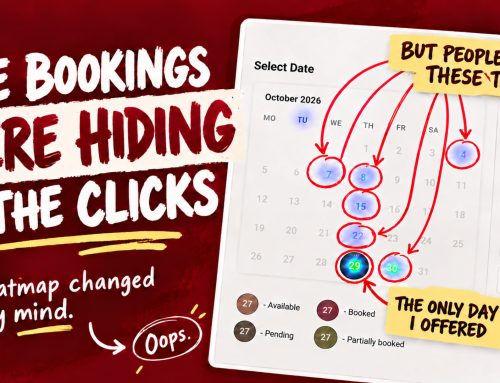
I’ve worked with businesses that changed their entire marketing strategy after three weeks because they felt it wasn’t working — without taking much more than a passing glance at what the early numbers were actually saying. But that’s what CEOs can do. A nervous conversation becomes a strategic rethink. Then suddenly people are rewriting campaigns, redesigning assets and burning through hours of work because somebody’s gut is feeling uncomfortable.
Sometimes all it needs is the marketing director to go back to what was agreed: what were we trying to achieve, what did we expect to see first, and what are the early numbers actually telling us? Explain it in normal, conversational language.
“We’re not at the end result yet, but this is moving in the direction we expected.”
Or:
“This bit isn’t behaving as we hoped, but it’s too early to throw the whole thing away.”
Measurement doesn’t just help you prove that something worked. Sometimes it gives you the confidence to hold your nerve long enough to find out.
A few examples
Thought leadership
Purpose: build recognition around a particular area of expertise.
Possible measures: relevant saves and shares, profile visits, replies, invitations and repeat engagement from the audience you want to become known by.
Podcast
Purpose: create a conversation people genuinely choose to spend time with and give interested listeners somewhere useful to go next.
Possible measures: watch or listen depth, returning audience, email sign-ups, replies or conversations prompted by it.
Campaign film
Purpose: help a defined audience understand the campaign and move towards its next step.
Possible measures: meaningful views, landing-page visits, registrations, downloads, enquiries or whatever action the campaign was built around.
Expert content
Purpose: get useful knowledge out of your people in a way an outside audience can understand and care about.
Possible measures: watch depth, saves, questions, replies, clicks into related material and conversations that reference the expert or subject.
You get the idea… None of this needs a 46-tab attribution dashboard. It just needs everyone to know, before the interesting locations, cameras, ideas and stakeholder requests start piling up:
What is this actually supposed to help happen?
Because good-looking content can still fail. One of the easiest ways to reduce that risk is to decide what success means before you press record.
Feel free to steal the five-question brief above for your next project.
And if you’ve got a video, podcast or content idea and you’re not quite sure what it needs to achieve — or even whether the format you have in mind is the right one — reply and tell me what you’re thinking.
That’s exactly the sort of thing we explore in a Content Fit Conversation: what you’re trying to make happen, who needs to care, what might fit the job and what would be sensible to measure before spending the money.
Darren
WIDEO.co.uk