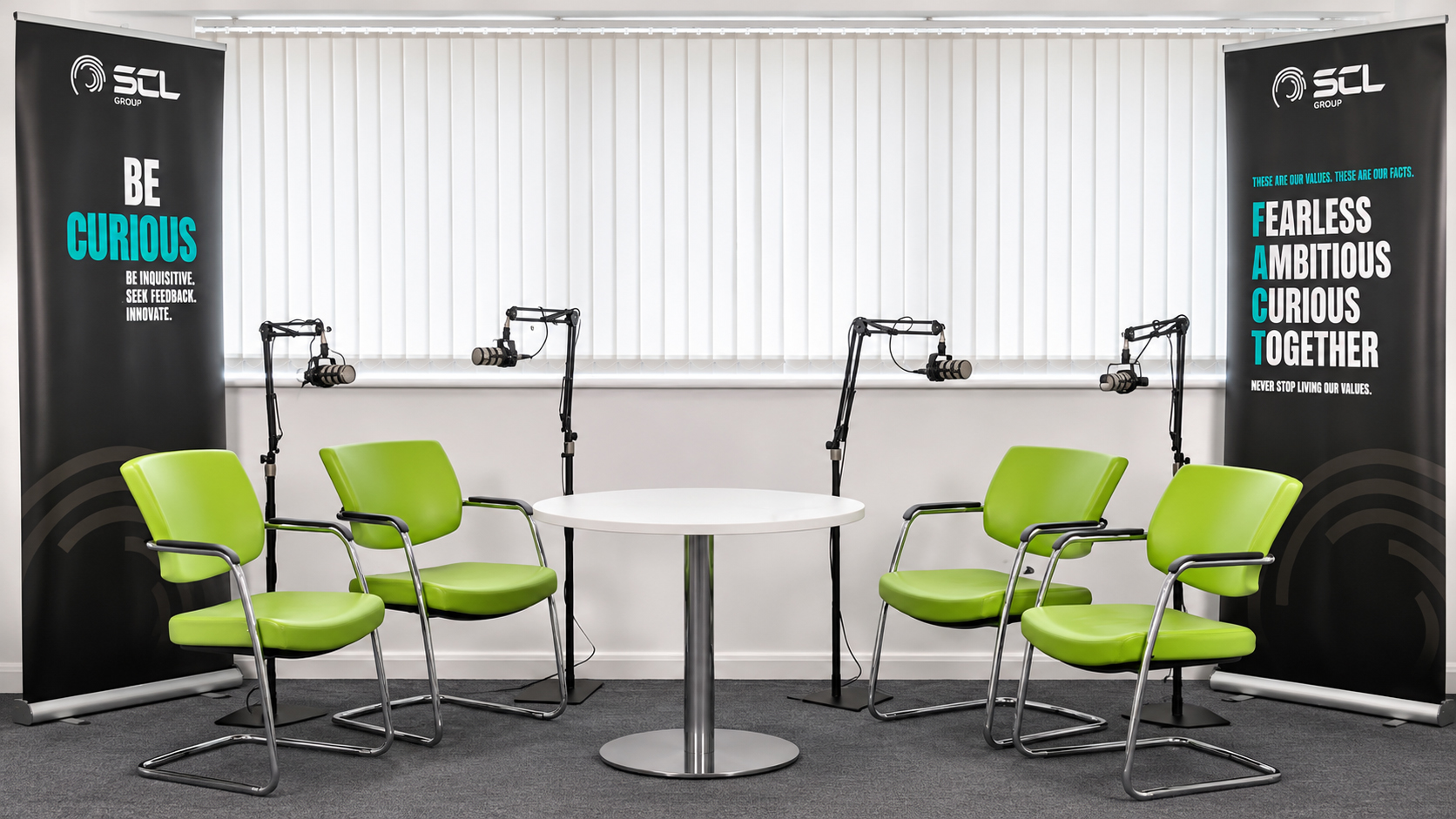
Why take the studio to them?
SCL Education wanted to record a series of podcast-style conversations with people from across their team for internal communications. My first thought was pretty simple.
Why move all those people when I can move the studio?
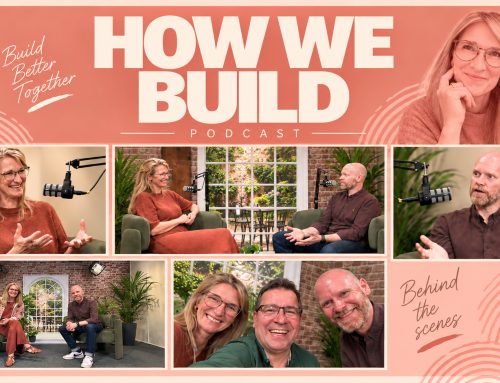
So I took the cameras, microphones, lighting, monitoring and live production kit to them and set up a four-person video podcast setup inside their own premises. It meant the contributors were already somewhere familiar, nobody had to lose half a day travelling to a studio, and SCL’s own space could become part of the look of the programme.
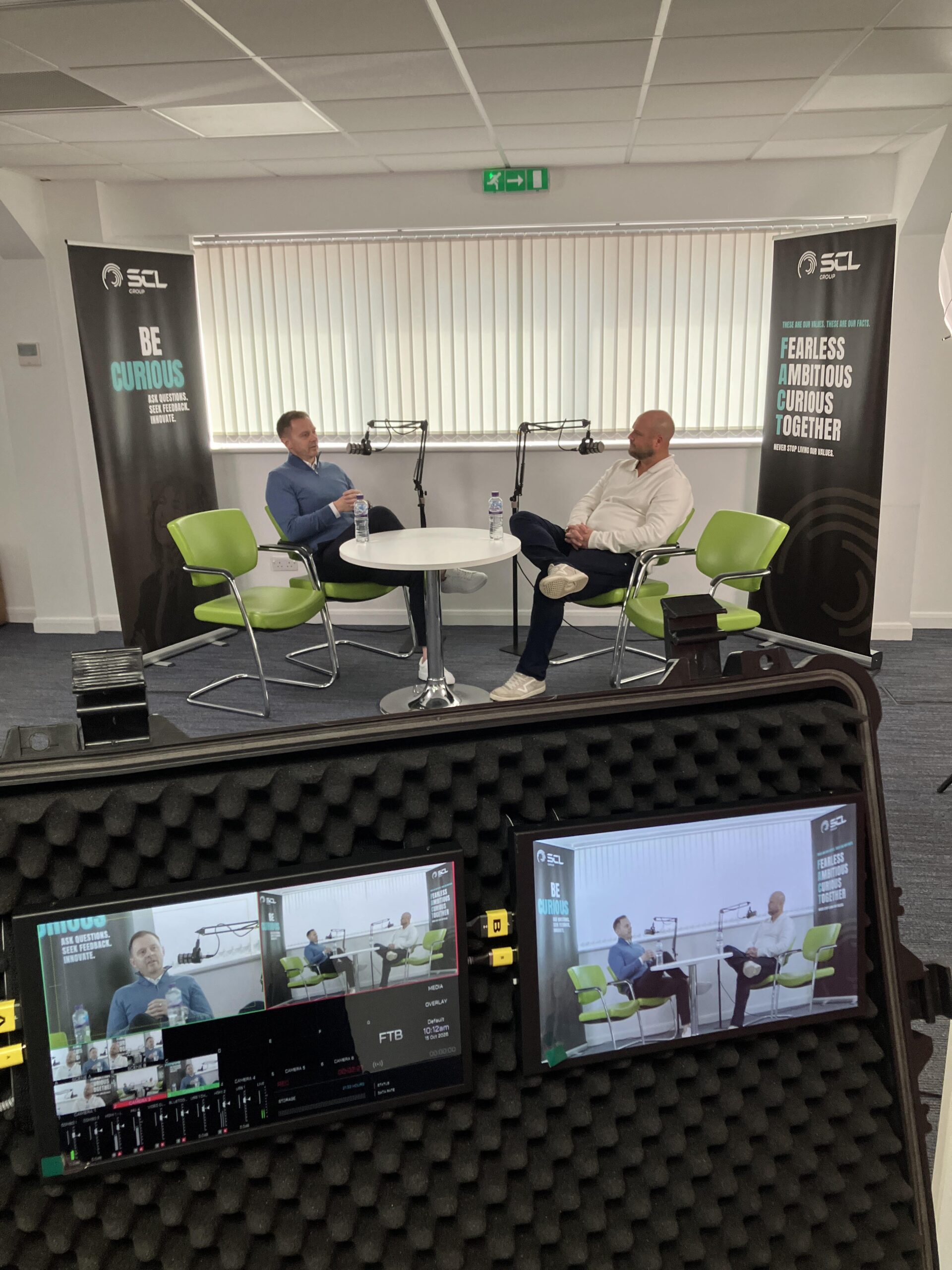
Can you record a professional podcast in an ordinary office?
Yes. Although I wouldn’t call every office suitable without seeing it first.
For this one, the space worked really well. SCL already had those brilliant green chairs, the banners gave us instant branding, and there was enough space for me to get the cameras where I wanted them without the whole thing feeling cramped.
I wasn’t trying to make their room look like the WIDEO studio.
Quite the opposite.
I wanted it to look as though SCL had their own podcast studio. The expensive-looking bit shouldn’t necessarily be the room. It’s what you do with it.
YOUR PEOPLE. YOUR PLACE. YOUR PODCAST.
The cameras, microphones and production kit can be ours.
The programme should still feel like yours.
Why does recording an internal podcast on site help?
Most of the people I film for internal communications aren’t presenters. They’re people who know their subject.
You don’t necessarily want to take somebody out of their normal environment, send them somewhere unfamiliar, put three cameras in front of them and then wonder why they suddenly sound a bit corporate.
At SCL, people could come into a room in their own workplace, sit down with colleagues and talk.
I could worry about the microphones, cameras, lighting and whether everything was recording properly. They could concentrate on the conversation.
And that’s normally where the good stuff comes from.
Instead of another email telling people what’s happening, you get to hear the people actually doing it talk about the work, the ideas and the things they’re proud of.
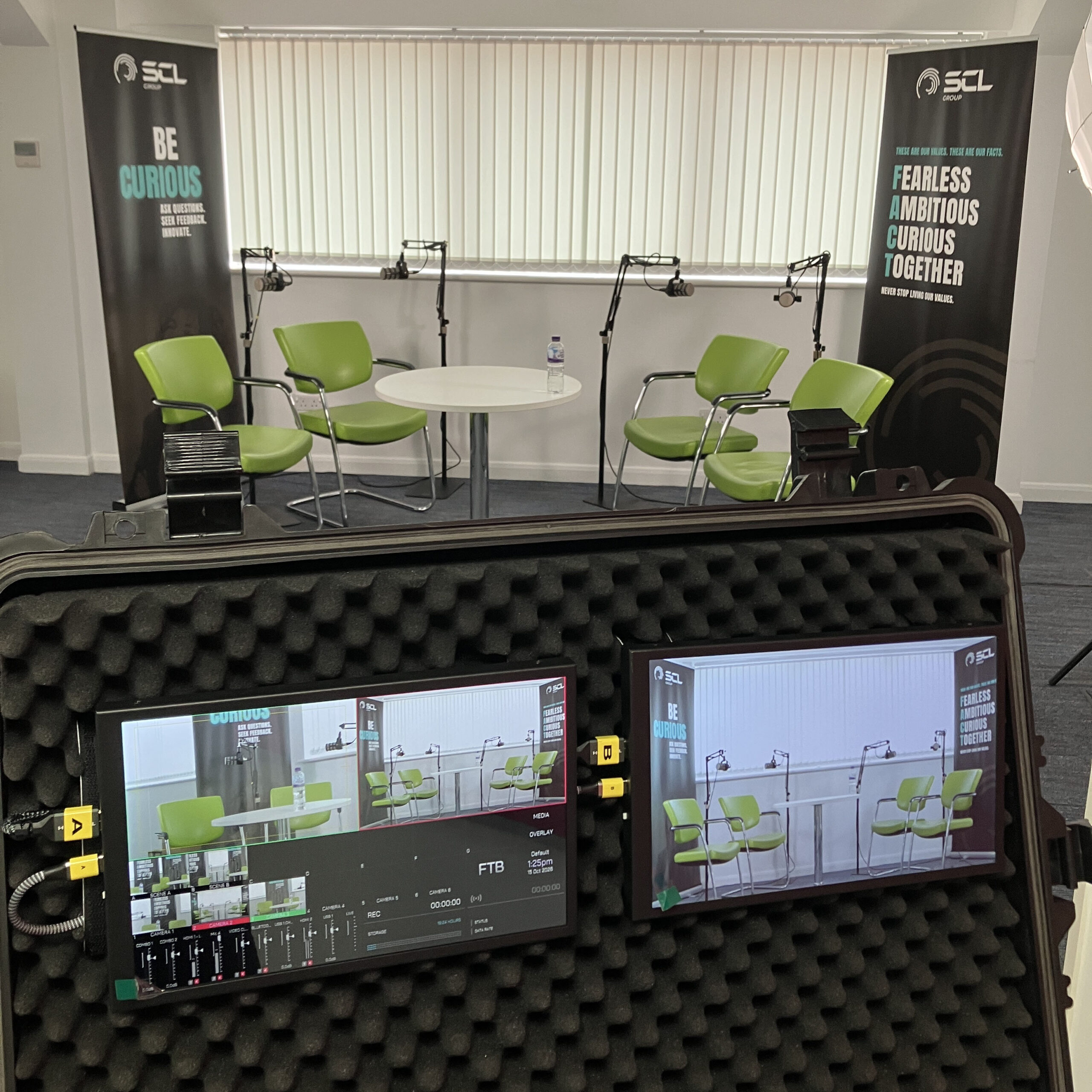
Four people and several cameras doesn’t have to mean a huge edit
This is the bit you don’t really see in the finished podcast.
While everyone is talking, I’m producing it. I’m watching the cameras, listening to the sound and cutting between the shots as the conversation happens.
So instead of finishing the recording day with a pile of camera files and starting from zero, you’ve already got a multi-camera version of the programme. That can make a big difference to turnaround.
I can still record the individual cameras and separate audio too, so there’s flexibility afterwards if something needs changing.
But the aim is to do as much of the work properly while we’re there, rather than creating unnecessary work later.
Can you record several podcast conversations in one day?
Yes, and this is where taking the studio into an organisation starts to make even more sense.
Once I’ve built it, lit it, framed the cameras and checked the sound, the hard bit is done.
Different contributors can then come in for their conversation without the whole thing having to be rebuilt each time.
That’s useful if you want to record people from different teams, capture several internal stories or make a batch of episodes while everybody is already together.
And because the studio has come to them, you’re not trying to coordinate half the company travelling somewhere else.
What do I look for before using a workplace as a podcast studio?
You don’t need to know the answer to all of this before getting in touch.
A few photographs or a quick video of the room can tell me quite a lot.
SPACE • SOUND • LIGHT • POWER • BACKGROUND • FURNITURE • BRANDING • ACCESS
I can then work out where the cameras might go, what needs bringing in and whether there are any obvious problems before the recording day.
Sometimes a room you wouldn’t immediately think of as a studio works surprisingly well.
What kind of organisations could use this?
This setup isn’t only for internal podcasts.
I can see the same approach working really well for:
Internal communications
Leadership conversations
Staff interviews and stories
Training and learning content
Customer conversations
Thought leadership
Branded video series
Multi-episode podcast days
Anywhere, really, where you’ve already got the people and the space and it makes more sense for me to come to you.
Could I turn your office into a podcast studio?
Quite possibly.
If you’ve got a meeting room, training room, office or other space in mind, send me a few photographs.
I’ll tell you what I think.
And if it works, I can bring the cameras, microphones, lighting and production setup to you and build the podcast around your people and your brand.
YOUR PEOPLE. YOUR PLACE. YOUR PODCAST.