MESSAGES THAT LAND – Monday 26th October
The scariest thing you can say to someone before filming: “Just be natural.”
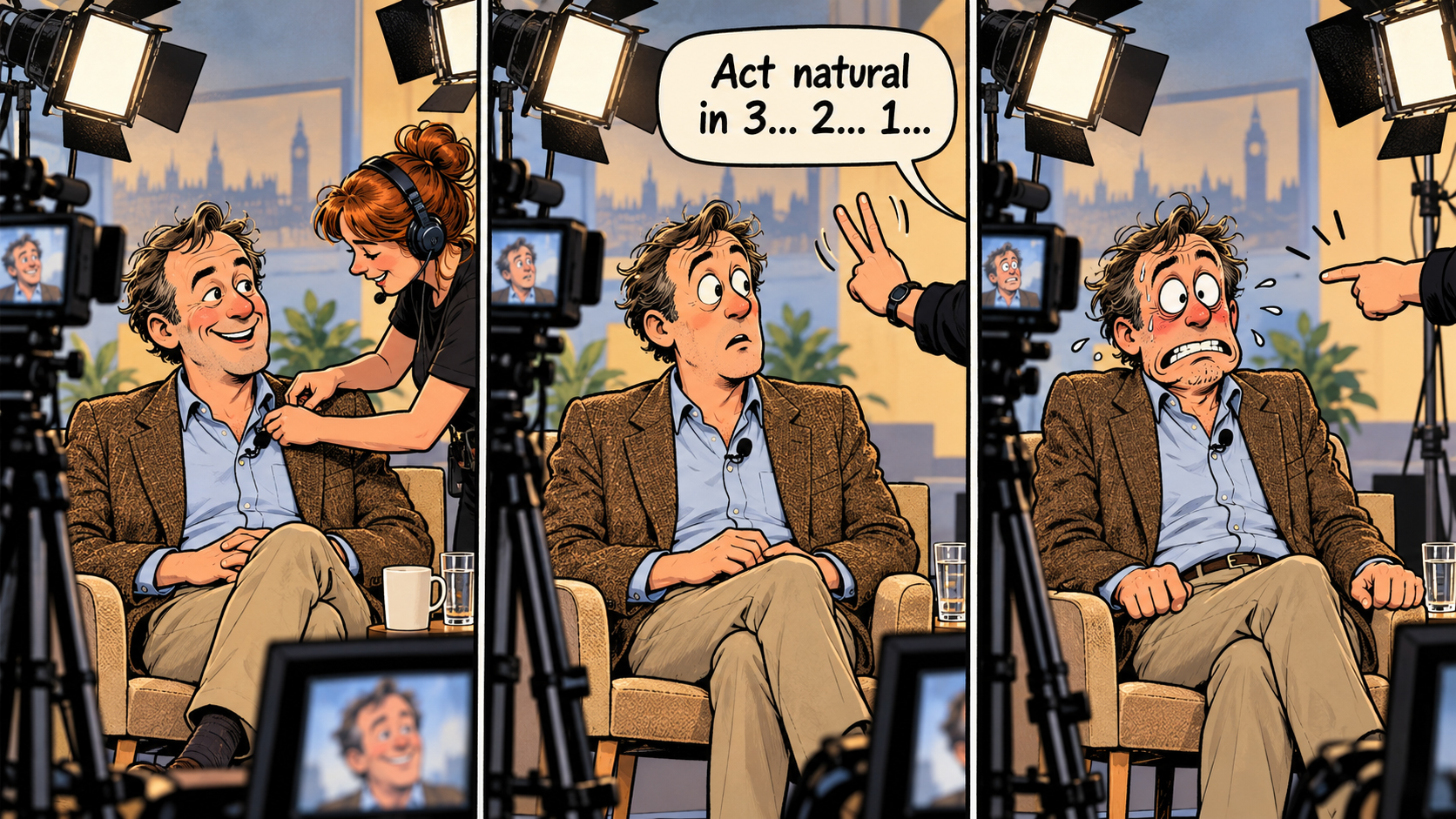
There are plenty of things that can make someone nervous before a camera starts rolling. The lights go on, a microphone gets clipped into place, somebody checks focus and suddenly a small group of people are looking at you as if something interesting is supposed to happen next. Then, usually with the very best of intentions, someone offers five reassuring little words: “Don’t worry. Just be natural.” At which point, quite often, the person stops being natural altogether. Their shoulders rise slightly, their voice changes and the relaxed person who was chatting perfectly happily a few minutes earlier suddenly starts speaking in complete corporate paragraphs because their mind has just gone blank and they are desperately reaching for any coherent sentence they can find. “We pride ourselves on delivering innovative, customer-centric solutions…” Where did that come from?
It is one of the stranger things about filming people who are genuinely brilliant at what they do. Put an expert in a meeting, over a coffee or in conversation with a colleague and they can be fascinating. They tell stories, give examples, wander off briefly because they have remembered something important and then come back with the sentence that makes the whole thing make sense. Point a camera at them, however, and suddenly they are no longer simply talking about what they know. They are trying to be good on camera, which is an entirely different job. Now they are thinking about where to look, what to do with their hands, whether they remembered the approved wording, whether they have covered all six key messages and whether the last answer sounded intelligent enough. While all that is happening inside their head, the interesting person you wanted to film is becoming harder and harder to find.
The problem is that “natural” is not really an instruction. Ask somebody to “walk normally” and there is a good chance they will immediately become aware of their legs. Telling someone to “be natural” has much the same effect. The moment we start consciously monitoring how naturally we are behaving, natural behaviour becomes rather difficult. So the real job is not to tell somebody to relax. It is to create a situation in which they have less reason to become tense in the first place. That starts with the way the conversation is set up, the expectations we create and, importantly, what we ask someone to think about while the cameras are running.
Some of the best things people say on camera appear while they still think you are warming up. Ask, “What actually happened?”, “Why did that matter?” or “What did you do next?” and you can suddenly get a completely different kind of answer. The language gets simpler, the voice becomes more animated and the person starts thinking about the subject instead of thinking about themselves. They have not been coached to sound authentic and they have not memorised the perfect sentence. For a moment, they have simply forgotten about the camera and started talking about something they genuinely know. That is often where the useful material is hiding.
This is why giving somebody more to remember can easily make things worse. Imagine an expert who is already slightly nervous being handed six key messages, three preferred phrases, a paragraph from the website, two statistics and a reminder that Legal would quite like one particular sentence worded in a specific way. Then, just before recording starts, somebody smiles and says, “Right, just be yourself.” At that point, it is not really an interview anymore. It is a memory test, and people doing memory tests tend to sound like people doing memory tests.
There are occasions when precise wording matters, of course, but if what you actually want is somebody’s expertise, experience or story, the mindset needs to shift. Who is responsible for the content? That responsibility should sit with the person behind the camera, not the person in front of it. A well-chosen question from an interviewer who understands the brief will often take you somewhere much more useful than carefully written paragraphs.
That does not mean abandoning structure. Good conversations need structure too. The difference is that the structure is driven by the interviewer, who understands what the finished video needs to look like and knows how to steer the conversation to get what is required. Sometimes the most useful thing an interviewer can do is listen properly to the first answer and then ask the question underneath it: “Can you give me an example?”, “What did that actually mean in practice?” or simply, “Why?” Quite often the first answer is the safe answer, the approved answer or the answer the person has used many times before. The second answer is where the real person begins to appear.
And this is where the pressure really belongs. The person in front of the camera should not have to carry the brief, the structure, the key messages and the shape of the finished film around in their head while also trying to sound natural. The interviewer should already know what is needed, what has been covered and what is still missing. If the conversation wanders, they steer it back. If an answer is too technical, they find another way in. If something important has not yet emerged, they ask the question that gets there. The contributor can concentrate on the one thing they actually need to do: talk about something they know.
That is why I am always slightly wary when somebody says, “They’re brilliant, but they’re terrible on camera.” Maybe they are. But perhaps they have simply been put into a situation that makes them less good. They have been asked to present rather than talk. They have been given a script that does not sound like them. They are trying to squeeze half a dozen messages into every answer, or nobody has told them clearly who they are actually speaking to. Sometimes all that expertise is there perfectly intact. It just needs a better route out.
The aim, for me, is not to manufacture perfection or turn everybody into a presenter. It is to help somebody sound like themselves at their best: clear, credible, human and worth listening to. That means deeply understanding the brief so that the right question, or the right follow-up question, can trigger the answer you need in a much more conversational way. The technical side of filming matters, of course, but cameras, lights and microphones can only record the conversation you manage to create in front of them.
So, this Halloween, if you really want to frighten somebody before filming, the recipe is quite simple. Turn on three lights, point a couple of cameras at them, hand them two pages of approved messaging and then smile reassuringly and say: “Just be natural.” Or you could do something considerably less frightening. Take the pressure of delivering the content away from them. Give them room to think, ask questions they can actually answer and let them talk about something they genuinely know.
Because natural does not usually come from an instruction.
It comes from knowing the interviewer has got your back.