MESSAGES THAT LAND – Monday 19th October
When measurement can save your a**e, the opposite is also brutally true.
It can settle an argument about what’s working. It can also reveal that the person making the wrong assumption is you.
I’ve been having some exciting first conversations with organisations doing brilliant work. Often they arrive with an idea for a video or podcast, and I love a creative conversation.
“We could include this.” “It could have that kind of vibe.” “Wouldn’t it be great if…?”
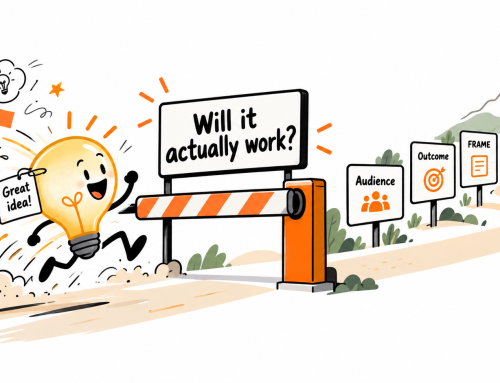
It might. But before we get to the sexy bit, I want to know: who are we talking to? What do they already understand? And what do we want them to think or do differently?
I can feel like a fun sponge asking. Yet the people closest to a subject often have the hardest time seeing it through an outsider’s eyes. We assume our audience knows what we know and cares about the details we care about.
Back in my media training days, I met CEOs who could explain an issue perfectly well to fellow executives, but whose message would sail straight past a breakfast TV audience. Their expertise wasn’t in doubt. The question was whether anyone outside the boardroom could follow them.
A way out of the “I’m right, you’re wrong” loop
That’s where measurement can save your a**e.
If a conversation gets stuck at “I’ve done this for years” versus “I don’t think it’s landing”, evidence gives everyone something more useful to look at. Are people watching? Where do they stop? What do they click? What questions do they ask? Does any of it lead to the action we hoped for?
The awkward bit is that the evidence might prove you wrong.
The booking that nearly told me the wrong story
I recently opened up my podcast studio at PLATF9RM in central Brighton so people could come in and have a go. Lots of people had popped their heads round while I was building it. The PLATF9RM team suggested an open day, I made a booking page, and I thought it would be busy.
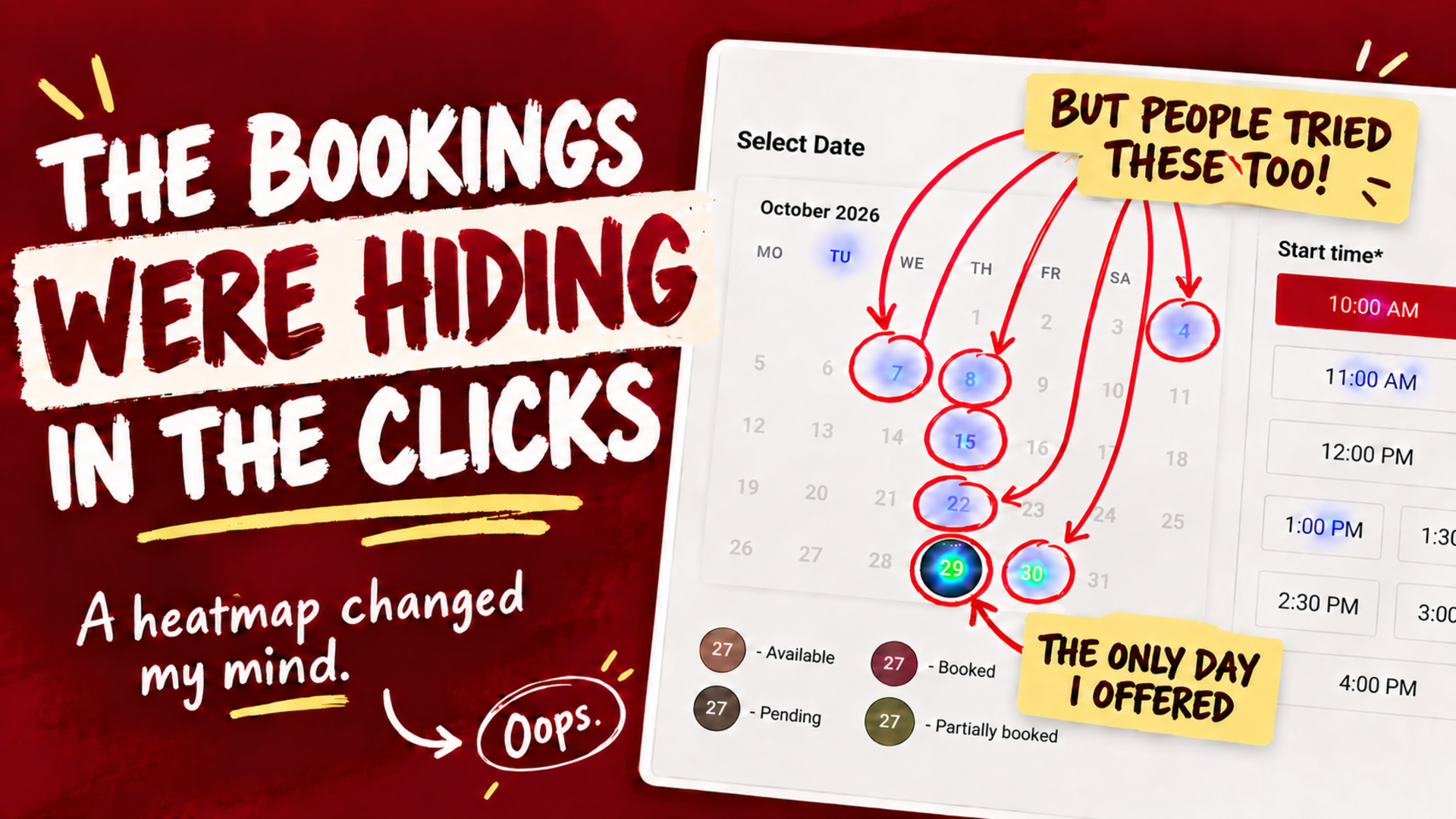
After a week, I had one booking.
Without measurement, that might have been the end of it. I could have concluded that people weren’t interested, quietly dropped the idea and missed the people who had tried to find a date that worked for them. Worse, I’d have taken away the wrong lesson.
Instead, I looked at the Crazy Egg heatmap of the booking page. Visitors had been tapping on dates other than the single day I’d made available. Some even tried a Sunday.
I thought the date was obvious. Their behaviour showed me that people were exploring other options, even though they couldn’t book them.
So I opened up more dates. A trickle of bookings followed, along with some really interesting conversations with people keen to try podcasting. I spotted the problem and changed the offer within a week.
One booking looked like a lack of interest. The clicks told a different story.
That’s the deal with measurement. It can help you challenge a room full of confident opinions. It can also stop you mistaking a problem with the offer for a lack of interest. And, occasionally, it reveals that the confident opinion was yours.
What are you currently putting down to a lack of interest that might actually be a gap between what you’ve offered and what your audience needs?