MESSAGES THAT LAND – Monday 28th September
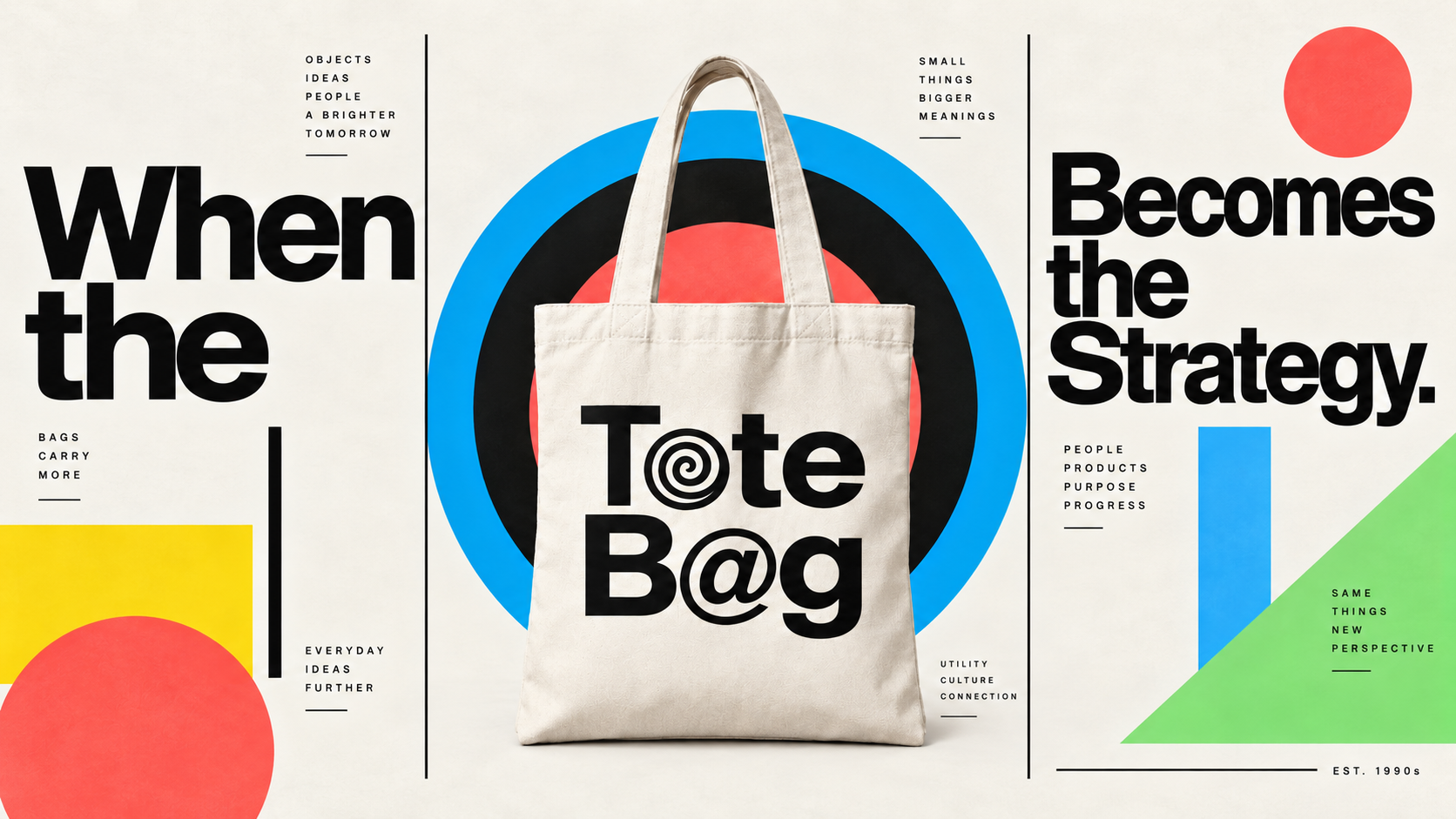
When the tote bag becomes the strategy.
Many years ago, I sat in a three-hour marketing meeting to launch a brand-new Learning & Development company.
I was excited. The parent company had brought together a whole bunch of new people with different skills, backgrounds and ideas. And getting out of my comfort zone into new territory is pretty much my comfort zone.
There was also a very clear market for the new business. We were aiming at senior leaders and C-suite executives dealing with difficult organisational problems: culture, change, leadership, reputation and, sometimes, genuinely serious issues.
So we knew who we wanted to reach.
Three hours later, however, I felt like the little boy in The Emperor’s New Clothes. Everyone else seemed delighted. I was sitting there thinking, “Sorry… did that meeting really just happen?”
Because somehow, the conversation had become almost entirely about …
the merch!
There were beautifully designed T-shirts with a sort of 1990s New Order aesthetic, tote bags and even retro DVDs we could post out containing cool videos about the new company.
And everyone was genuinely excited about it.
To be fair, there were some very experienced and senior people in the room. The problem was that they were enjoying the creative process too. Ideas were bouncing around, people were building on each other’s suggestions, there was promotional money available and the whole thing gathered momentum.
I said nothing.
I seemed to be the only potential “fun sponge” in the room, and at that point in my career I wasn’t quite confident enough to stop the creative party and ask the obvious question:
What problem is any of this actually solving?
The strange thing is, we already had a much better answer sitting right in front of us.
Just two weeks earlier, the new team had delivered one of its first sessions. It was for senior leaders in the housing sector grappling with the aftermath of Grenfell.
Their own organisation wasn’t responsible for Grenfell, but what had happened presented enormous questions for the entire sector around leadership, responsibility, safety, culture and trust.
The session was facilitated brilliantly. The people in that room felt safe enough to have some very open conversations. They allowed me and my video team into the room, and afterwards they were happy to talk honestly about their experience.
We captured something genuinely representative of the day. Not just what the new company did, but how it felt to work with them.
I’d seen the whites of our customers’ eyes. I’d watched their conversations and behaviours. I’d seen what made them lean forward and what helped some very senior people leave their senior egos outside the room and talk honestly about difficult issues.
In other words, we had an extraordinary amount of insight into the people we wanted to reach.
So why, two weeks later, were we discussing New Order-inspired tote bags?
Simple. We got carried away.
There was promotional money available. There were creative people in a room. Everyone started riffing. But nothing was being regularly held back up against the real objective.
Because saying “our audience is senior executives” is nowhere near enough.
That tells you something about who they are. It doesn’t necessarily tell you anything useful about why they need you.
Knowing someone earns £200,000 a year might tell you something about the restaurants they visit, the car they drive or the design aesthetic they appreciate. But it doesn’t tell you the problem keeping them awake at 3am. It doesn’t tell you the conversation they’re frightened to have with their board. It doesn’t tell you what would make them trust you enough to admit they don’t have all the answers.
And it certainly doesn’t automatically mean they need a cool tote bag.
I’ve reflected on that meeting a lot. It was probably the most extreme example I’ve experienced, but I’ve been in plenty of versions of it before and since.
These days I’m rather more comfortable being the short-term fun sponge.
Because I think two things were missing.
1. A rounded objective that everyone keeps returning to
It isn’t enough to say, “We want to reach senior executives.”
You need to go deeper. Who are they? What are they dealing with? What needs to change? What do we want them to understand, feel or do? What would make them believe us?
Then, as the creative ideas start to fly, you keep bringing them back to those questions.
That doesn’t kill creativity. It makes creativity useful.
Perhaps the tote bags still survive the test. Probably not.
But perhaps instead we create a series of honest stories from senior leaders across different organisations. Those might become videos, a podcast, short written pieces or even beautifully designed cards using understated photography and one carefully chosen line capturing the problem each leader faced.
Now we’re not choosing outputs because they’re cool. We’re choosing them because they help communicate something that matters.
2. The right mix of people in the room
Years earlier at Capital Radio, I’d been introduced to the Belbin approach to team roles.
The lesson that stayed with me wasn’t really about remembering a list of personality types. It was much simpler: who you put in the room changes what comes out of the room.
We once threw a group of people together to solve something and it didn’t go particularly well. Later, we were much more deliberate about creating a group with different behaviours and strengths, and it worked far better.
You need the imaginative person. You need the person who throws the slightly ridiculous idea into the middle. You need the person who works out whether it can actually be done.
And, occasionally, you need the irritating person asking, “Why are we doing this again?”
That applies directly to content too.
It’s why I’m wary whenever content planning starts with, “We need six videos, twelve LinkedIn posts, a podcast and some clips.”
Maybe you do. But that is an output list. It isn’t a strategy.
Start instead with the audience and the problem. Find the questions those people genuinely need answered. Then get your expert into a room for an hour and have a really good conversation about those questions.
One strong source conversation might give you a main video or podcast episode. Within it there may be six brilliant two-minute answers. The transcript might reveal another ten questions worth answering. A particular story might deserve its own written post. One sentence might become the starting point for an entirely different conversation.
Suddenly you haven’t simply “repurposed some content”. You’ve built a useful bank of material around a real audience need.
And, crucially, you don’t need six separate creative processes and six separate approval chains to do it. You’ve created everything from a common source, with a common audience and a common objective.
That old meeting taught me something I’ve carried around ever since.
Creativity works much harder when somebody gives it something useful to push against.
Get the objective clear. Get the right mix of people in the room. Then riff.
You may even end up with the tote bag.
But at least you’ll know why it exists.
And yes, the person who asks that awkward question may look like the fun sponge for five minutes. They may also be the person who stops you spending your marketing budget on something everybody in the meeting loves…
…and nobody outside it needs.
Before you order the tote bags…
If you’ve got plenty of ideas for content but aren’t quite sure which ones actually fit your audience, objective and message, that’s exactly what our Content Fit Conversation is for.
It’s a short conversation to work out what’s worth making, what probably isn’t, and where your time and budget will work hardest.