Training Ground Guru: Making Remote Podcast Interviews Sound Better
Great content matters more than perfect conditions.
The Training Ground Guru Podcast brings together some of the most interesting people working behind the scenes in elite football. That also means its guests can be anywhere in the world.
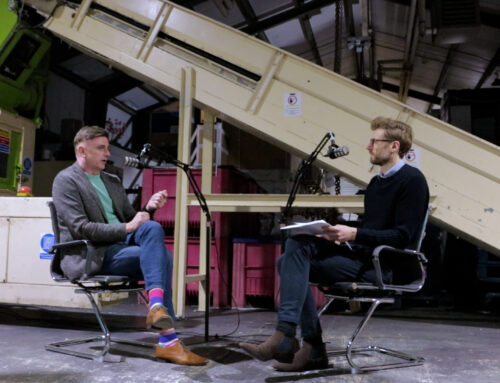
For this episode, presenter Simon Austin was in the UK and world-renowned sleep expert Anna West was in Sweden. Anna works with teams competing in the Premier League, Champions League and World Cup, so the opportunity to have the conversation mattered far more than whether everybody could be sitting in the same podcast studio.
And that’s really the starting point for us.
CONTENT IS KING.
If somebody has something genuinely interesting to say, your audience will forgive a picture that looks like a Zoom call. What they are much less forgiving of, often without even realising it, is audio that’s difficult or tiring to listen to.
So you don’t necessarily need to fly a guest into a studio. You just need to give the recording a little thought before you start, then know what can sensibly be improved afterwards.
The picture can say Zoom. The sound doesn’t have to.
A remote interview will always have some limitations. Internet connections vary. Rooms can sound hollow. A microphone may be further away than we’d ideally like. The call itself compresses everything before it ever reaches the edit.
We’re not pretending those limitations don’t exist, and we’re not trying to turn every Zoom call into Abbey Road.
But there is a big difference between accepting the limitations of a remote interview and simply accepting whatever comes out of the call.
A few simple choices before recording can give us much better material to work with. Find the quietest and softest room available. Use headphones where practical. Keep the microphone or computer in a sensible position. Avoid sitting six feet away from the laptop in a large echoey kitchen. And, when possible, capture the best quality version of each voice available using apps on your mobile hone you already have.
None of that needs to become a technical exercise for the guest. A little guidance from us before the interview and you’re away.
What happens in the edit?
The short example above gives you an idea.
We take the material that was actually captured and work on the things that make a conversation easier and more pleasant to listen to. We can reduce distracting background sound, make voices feel more consistent, soften some of the harshness that comes with online calls and balance the different speakers so you’re not constantly reaching for the volume control.
We also edit the conversation itself. That might mean tightening unnecessary gaps, removing distractions, smoothing an awkward edit or simply knowing when to leave well alone.
The aim isn’t to make somebody sound processed. Quite the opposite. We want the technology to disappear so the listener concentrates on what the person is saying.
That’s especially important when the content is good.
Because sometimes the story is bigger than the production
Another Training Ground Guru interview is a great example.
In May 2026, Simon interviewed former Celtic manager Wilfried Nancy. Nancy had been sacked after a dramatic spell of just 33 days in Glasgow, and this was his first interview since leaving the club.
In other words, there was a real story there. People wanted to hear what he had to say.
The interview was recorded remotely. Nobody watching it was going to mistake the pictures for a multi-camera television studio, and that didn’t matter. The important thing was making sure the sound supported the quality and topicality of the conversation rather than getting in its way.
The result travelled well beyond the podcast itself. Clips from the interview were picked up and used by major broadcasters including the BBC and Sky.
That’s the bit we think is worth remembering.
A brilliant interview doesn’t suddenly become less brilliant because one person is in Britain and the other is in Sweden, the United States or somewhere else entirely.
Your audience will accept the visual language of a remote conversation when the content earns their attention. Give them clean, comfortable audio as well and you’ve removed one more reason for them to click away.
You concentrate on getting the conversation. We’ll help with the rest.
If you already know the person you want to interview and the story you want to get from them, you don’t necessarily need a complicated technical setup.
Talk to us before you record and we can give you some straightforward guidance on getting the best source material possible from the equipment and location you’ve got.
Then send us the recordings.
WIDEO.co.uk can take care of the podcast edit, sound clean-up, video edit and short-form clips, turning a straightforward remote conversation into something that’s much easier to watch, listen to and share.
Because we’re not trying to replace the content with production tricks.
We’re protecting the content so people actually want to hear it.
You can explore the Training Ground Guru Podcast at trainingground.guru.