The Problem With “Can You Give Us A Testimonial?”
Most businesses would love their happiest clients to explain why they are good at what they do. But put a camera in front of someone and ask them to “give us a testimonial” and you can very quickly end up with something polite, positive and almost completely unusable.
A good client testimonial sounds simple enough. You find somebody who likes working with you, sit them down in front of a camera and ask them to tell people why. And then the worries begin. Should we give them the questions in advance? Do they need to prepare something? What if they freeze? What if it sounds rehearsed? What if the best we get is:
“They were great. Really professional. We’d definitely recommend them.”
Lovely to hear. Not enormously useful. Because the real challenge is not getting a client to say something nice about you. It is getting them to say something that helps somebody else understand why you were good, what the experience was like, what changed and why any of it mattered.
So perhaps the better question is:
How do you get a client to say something genuinely useful about you on camera?
For us, the answer is not really about the camera. It is about the conversation.

The Brief
ted Learning already had something valuable: a happy client with a genuine story to tell. Richard Mason Fowler from Whittard had experienced their work first-hand. He had seen how people responded to the training, what stood out and why the approach worked. So in one sense, the hard bit was already there. The story existed. Our job was to help Richard tell it. Because there is a big difference between somebody saying:
“ted Learning were great to work with.”
and somebody explaining what actually made them great to work with. The first is a compliment. The second starts to become evidence. A future client wants to understand what happened, how people responded, why the approach worked and what difference it made. That is the useful bit. So rather than simply recording Richard saying nice things about ted Learning, we wanted to get underneath those nice things and find the story behind them.
How WIDEO.co.uk helped
One of the easiest ways to make a testimonial sound unnatural is to treat it like a questionnaire. You can have all the right questions written down, work through them carefully and technically cover everything you wanted to cover. But in doing that, you can also lose the very thing that makes a testimonial believable: a person talking naturally about something they genuinely experienced. So our approach is much closer to having a conversation. We still know what we need to discover, but we listen properly to the answer.
If Richard says something interesting, we can explore it. If he uses a phrase that reveals what really mattered to him, we can stay with it. If an example comes up, we can ask what happened next. That is often where the useful stuff lives. Not necessarily in the perfectly prepared question, but in the thing somebody remembers while answering it.
With Richard, the aim was to get beyond whether he liked the training and into why the experience worked. What did he notice? How did people respond? What felt different about the way ted Learning approached the session? What made it memorable? Those answers give a future customer something much more valuable than praise. They start to build a picture of what working with ted Learning might actually feel like.
Should You Script A Client Testimonial?
Usually, no.
A script can make everybody feel safer before filming, but there is a trade-off. People stop thinking about what actually happened and start thinking about the words they are supposed to remember. That is when sentences become more formal, natural pauses disappear and the whole thing starts to sound a bit like marketing copy. The viewer may not be able to explain exactly why, but they can often feel the difference. That does not mean we simply point a camera at someone and hope for the best. There is still a structure. There are still things we need to uncover. We still know where the story needs to go. The difference is that the interviewee does not need to memorise any of it. They just need to remember their own experience. That’s usually a much easier conversation to have.
What Makes A Good Video Testimonial Question?
For us, it is usually a question that helps somebody remember rather than perform. “Why would you recommend ted Learning?” is not a terrible question. But it often produces exactly the sort of answer you would expect:
“They were great.”
“Really professional.”
“We’d definitely work with them again.”
All nice things to hear. But much more useful is understanding what was happening before the training, what Whittard wanted people to take away from it, what Richard noticed while the session was happening and whether there was a moment when he thought:
“Yes. This is working.”
That is where the story starts to become specific. And specifics are what make testimonials credible. Because a future customer is not really looking for adjectives. They are looking for evidence.
The Finished Video
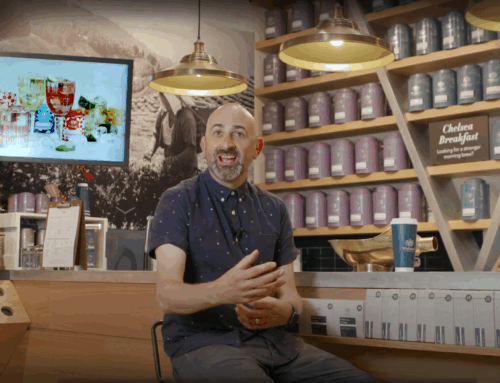
The finished video works because Richard is not simply sitting there telling us that ted Learning are brilliant. He is talking about an experience. And while he does that, we can actually see the work he is describing. We see people taking part, discussing ideas, presenting, reacting and learning together. That combination matters. Richard gives us the client perspective. The pictures give us the evidence.
So rather than ted Learning telling the audience how good ted Learning is, we have a client explaining what happened and footage that helps prove it. That feels very different. And it is a much stronger kind of testimonial.
Your Clients Probably Already Know What Makes You Good
The difficult bit is getting that knowledge out of their head and into useful words. That is why “Can you give us a testimonial?” is rarely the best place to start.
“Tell me what happened.”
is much better. Then we can explore what changed, what stood out and why it mattered. Because future customers are not really looking for compliments. They are looking for reassurance. They want to recognise their own problem. They want to see evidence that you understand it. And they want to get a feel for what might happen if they choose you. A good client testimonial can do all of that. But first you need the right conversation.
Need To Capture A Client Story?
If you have clients who love what you do but you are not quite sure how to turn that goodwill into something useful on camera, that is exactly where we can help. We can think about what a future customer actually needs to hear, shape the conversation around that, make the person in front of the camera feel comfortable and then follow the interesting bits when they appear. Because they nearly always do. The result should not feel like somebody reading out your marketing messages for you. It should feel like a real person explaining what happened, why it mattered and why they would choose you again.
Less scripting. Better conversations. More useful answers.