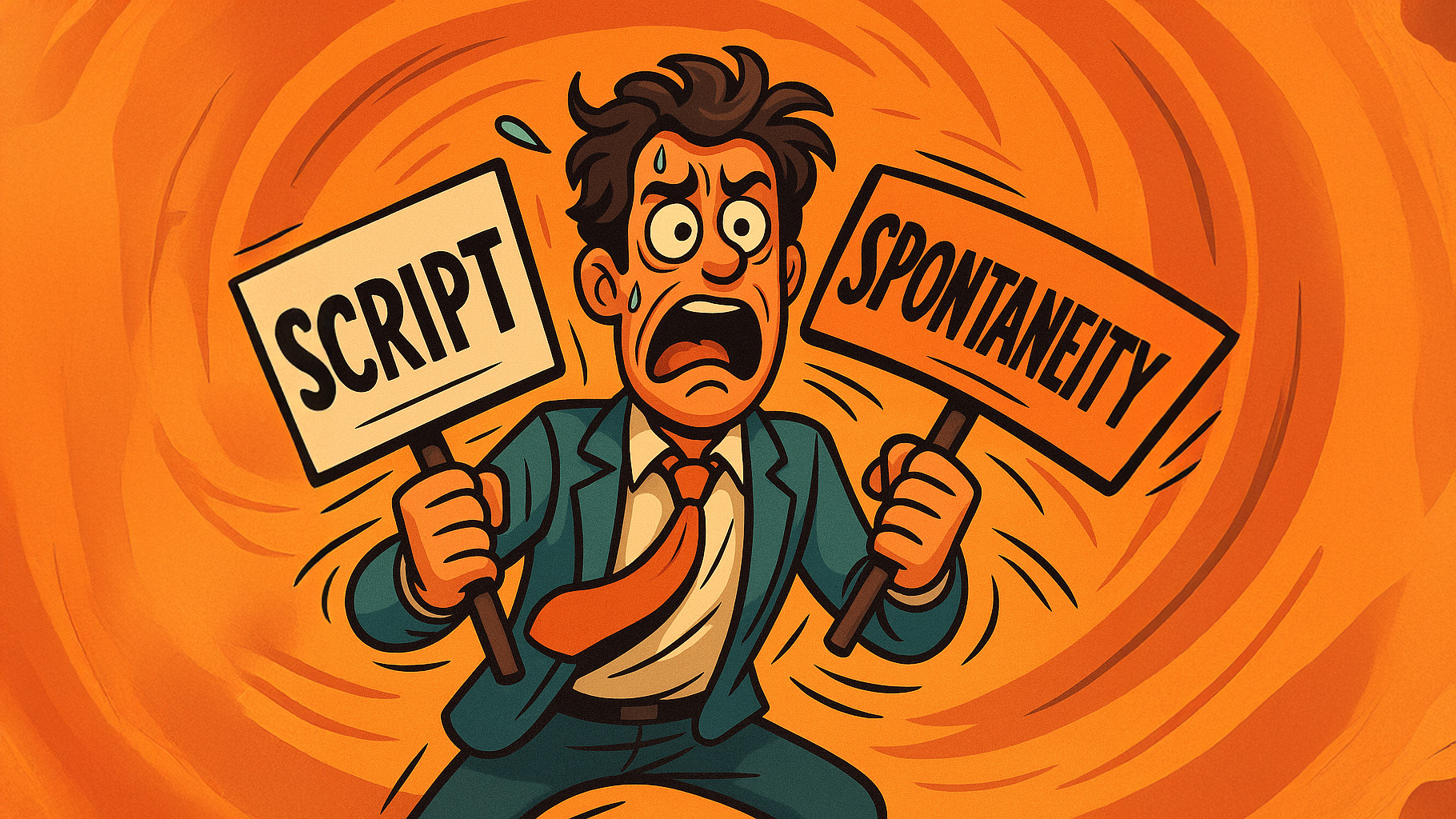
Script or Spontaneity? How to Decide Before Filming
Finding the sweet spot between message control and human connection.
Every marketing director knows the dilemma.
You’ve got a big shoot coming up. The message matters. The stakes are high.
Do you script it word for word — or trust your people to just talk naturally?
Both approaches can work brilliantly.
Both can crash and burn.
So how do you decide which route to take before the cameras start rolling?
🎬 Start with your purpose, not your preference
The right choice depends less on style and more on intent.
If the goal is precision, like explaining something complex, protecting regulatory language, or delivering key brand lines, a scripted approach gives you control.
It’s efficient, clear, and easy to repurpose later across campaigns.
But if the goal is connection. Like warmth, empathy, authenticity, story, then spontaneity wins every time.
It lets real people sound like… well, real people.
The trick is knowing when to use which.
🧠 When scripting helps (and when it hurts)
Scripting is brilliant for:
-
Product explainers or campaign launches
-
Regulated industries (finance, pharma, energy)
-
Videos that will be subtitled, translated, or repurposed
But it hurts when it makes people sound like actors.
The camera exaggerates stiffness. Nothing kills credibility faster than someone reading a “natural” line from a teleprompter.
That’s why, when accuracy is critical and confidence is low, it’s often best to leave it to the experts.
Experienced presenters (The kind with broadcast or corporate communications backgrounds) know how to deliver precise language with warmth and flow.
They can handle compliance-heavy messaging without sounding wooden or defensive.
And they make it sound effortless, because they’ve done it for decades.
At WIDEO.co.uk, we often pair these presenters with a client’s subject experts behind the scenes.
That way, the message is 100% accurate, but the delivery still feels human.
We can also help shape scripts so they meet compliance requirements and sound natural to the ear — the sweet spot between legal and likeable.
And here’s the challenge for compliance-heavy industries:
You don’t have to say everything in the script.
Focus on your audience and the one message you want them to remember.
If the detail matters, link to the full terms or technical notes on your website.
Your viewers will thank you and they’ll actually stay to the end.
If it needs to be said right, say it with the right voice and with the right level of detail.
💬 Why spontaneity feels alive
There’s a reason unscripted interviews and podcasts connect so well.
We lean in when someone thinks out loud or when we catch a pause, a laugh, a spark of honesty.
Unscripted content gives you emotional texture.
It makes your brand feel human.
It also creates soundbites and moments you could never have planned. The kind that go further on social because they feel true.
The risk? Waffle.
Without direction, spontaneity can wander. That’s why even “off the cuff” filming needs a tight framework. It also saves you edit time.
🧩 The hybrid: structured spontaneity
Our favourite approach at WIDEO.co.uk is what we call structured spontaneity.
It means:
-
Setting clear themes, not scripts.
-
Preparing contributors with talking points and emotional beats, not lines.
-
Capturing multiple takes and assembling the best moments in the edit.
This approach keeps the energy real while protecting the message. It’s the best of both worlds.
🚀 The takeaway
You don’t have to choose between sounding smart and sounding human.
The best videos balance both. Clarity and warmth, message and meaning.
So before your next shoot, ask one question:
“Do I need this to sound perfect, or to feel real?”
Because the answer to that will tell you whether to script, to improvise … or to call in the experts who can help you do both.
(For more on tone and clarity, the GOV.UK writing guidelines are a great benchmark — simple, natural, and human.)