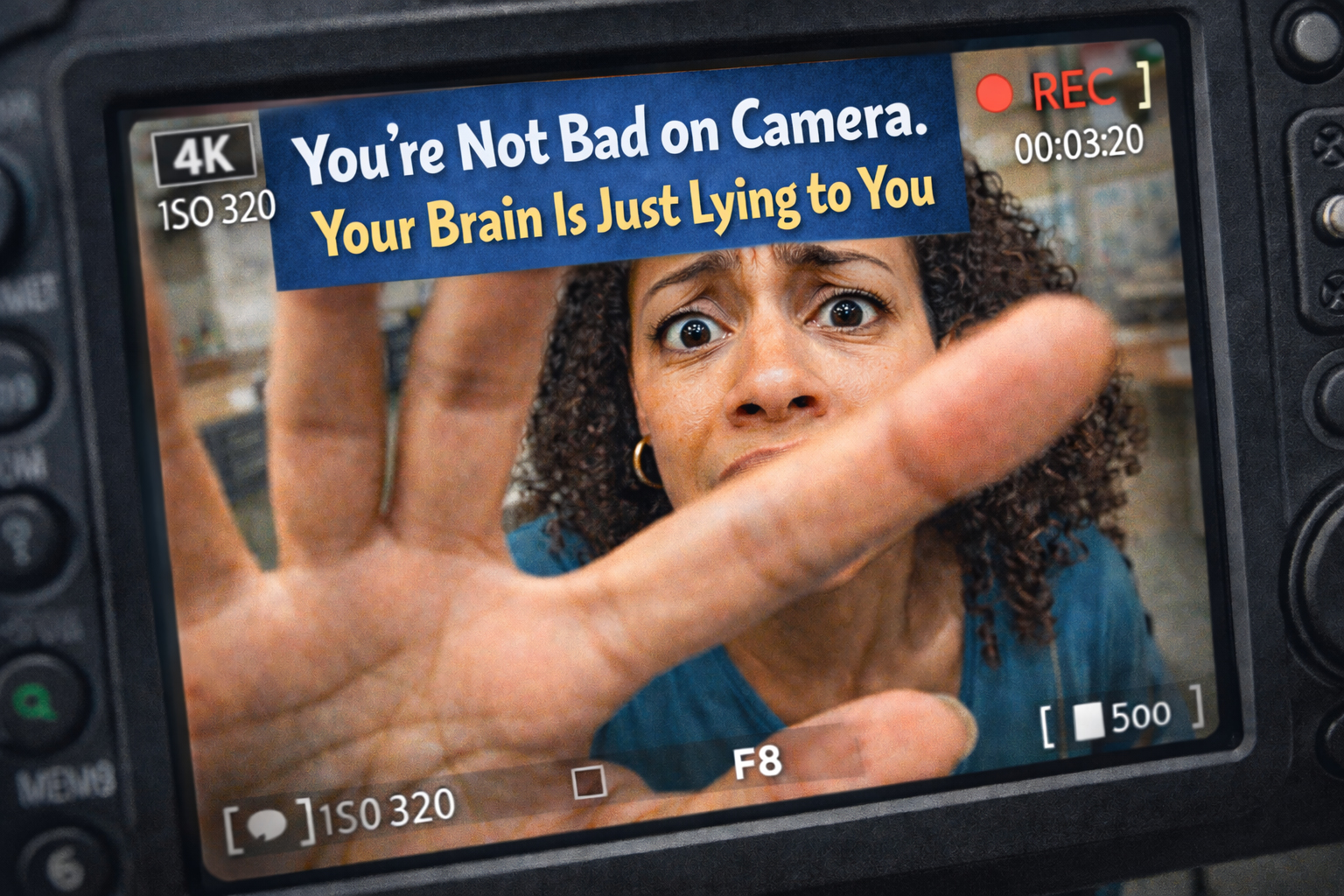
You’re Not Bad on Camera. Your Brain Is Just Lying to You.
Why capable, confident people often hate watching themselves back.
If you have ever watched yourself on camera and immediately thought,
“I look awkward” or “I sound strange,”
you are not failing at video.
You are being human.
This reaction is incredibly common. In fact, the more capable and experienced someone is in real life, the more surprised they often feel when they dislike how they appear on screen.
The good news is simple.
Nothing is wrong with you.
Your brain is just trying to protect you from something unfamiliar.
A recent client moment
Not long ago, I worked with a senior manager who had been asked to record a short internal update.
In meetings, they were confident.
With their team, they were clear and articulate.
They knew their subject inside out.
But the moment they watched the playback, everything changed.
“I can’t use that,” they said.
“I just don’t look right.”
The reaction was instant and emotional.
And very real.
The interesting part is this.
Nothing about their delivery was actually wrong.
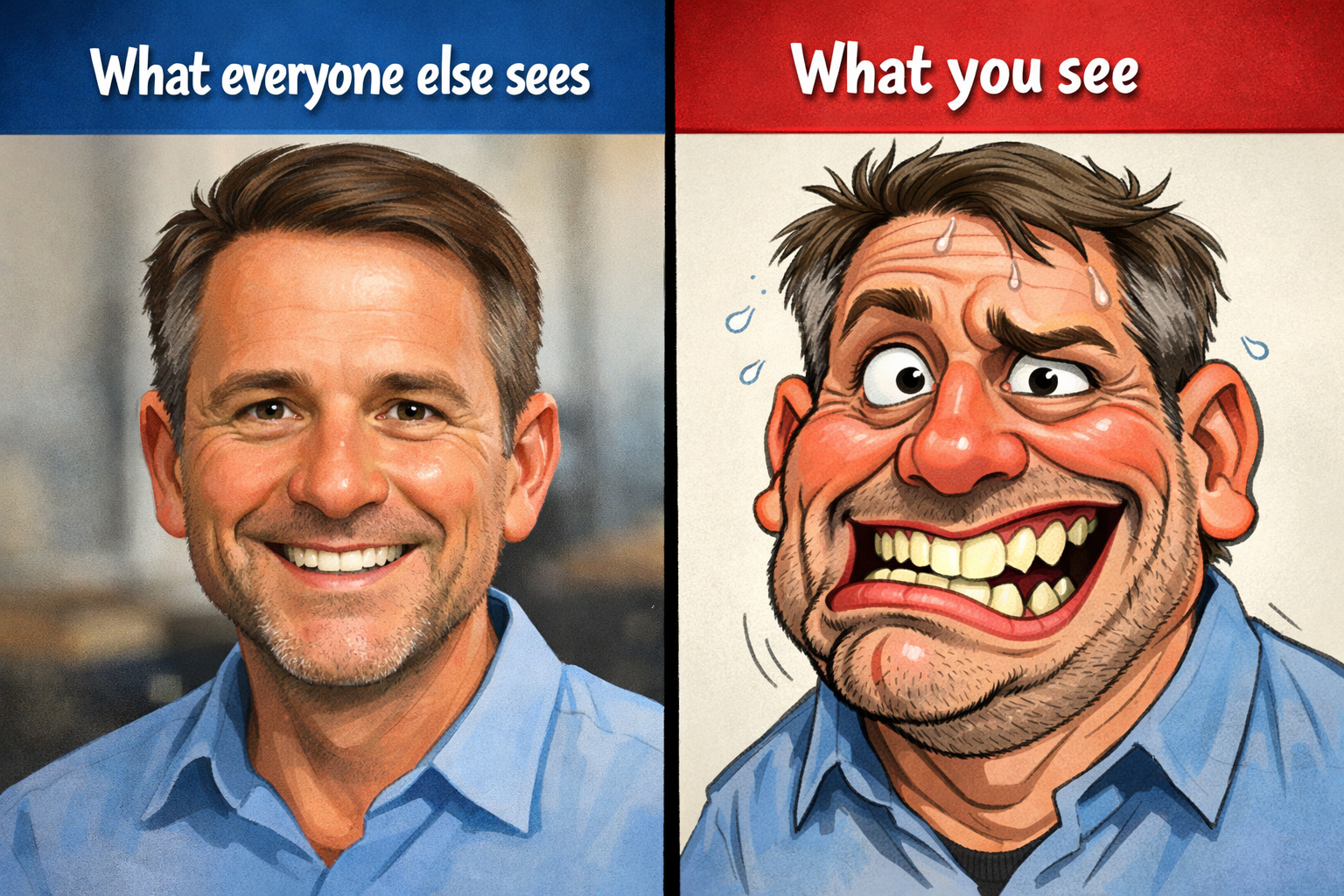
To everyone else in the room, they looked calm, professional, and completely credible.
So what was really going on?
What is actually happening in your brain
There are two quiet tricks your brain plays on you every day.
First, the mirror effect.
When you look in the mirror, you see a reversed version of your face.
It is the version you have seen your entire life.
Your brain labels that version as “correct.”
Video shows the non-reversed version.
To everyone else, this is completely normal.
To your brain, it feels subtly wrong.
Second, the voice effect.
When you hear yourself speaking in real life, the sound travels through bone and tissue as well as through the air.
This makes your voice feel warmer and deeper.
Recorded audio removes that internal resonance.
So when you hear playback, your brain again thinks,
“That doesn’t sound like me.”
Put those two effects together and your brain concludes something must be off.
Even when nothing is.
Why the emotional reaction feels so strong
Humans are wired to notice social risk.
Thousands of years ago, being judged by the group could mean exclusion.
And exclusion could mean danger.
Today, recording a video update is obviously not life threatening.
But your brain still reacts to the feeling of being watched and evaluated.
So when you see or hear something unfamiliar, it raises a small internal alarm.
That alarm feels like embarrassment or discomfort.
And your instinct is to stop the video immediately.
Again, this is not weakness.
It is biology.
The moment everything shifts
Back to the senior manager.
Once we explained what their brain was doing, something changed almost instantly.
The pressure dropped.
The self-criticism softened.
They stopped trying to fix every tiny detail.
We recorded another take.
It was calmer.
Clearer.
Completely usable.
Not because they suddenly became “good on camera.”
But because they stopped fighting themselves.
The real takeaway
Feeling uncomfortable on camera does not mean you are bad at it.
It usually means one simple thing.
You are seeing and hearing yourself without the filters your brain is used to.
Confidence on video rarely comes from perfect delivery.
It comes from trusting your message enough to keep going anyway.
When that shift happens, everything becomes easier.
Your tone settles.
Your clarity improves.
And the person people already trust in real life finally shows up on screen.
Want help making your message land?
These small psychological barriers are exactly the kinds of things we explore on the Land and Deliver podcast.
Practical ideas.
Real-world challenges.
Clear ways to help your message land and your delivery feel natural.
You can listen to the latest episode and sign up for updates at:
landanddeliver.uk
And if video is something you know you should be doing, but something still feels like it is holding you back, you are not alone.
You are just human…..and THAT’S why people will love you.