What a Short Independent Film Starring Stephen Graham Taught Me About Breaking Creative Rules
Inspired by a true story, brought to life by Stephen Graham — and proof that the most powerful ideas come from paying attention.
I love being around creatives who operate in a different sphere to me. It freshens my thinking, jolts my perspective, and reminds me to challenge my own mantras.
Without wanting to drop too many names, I once spent a truly enlightening evening in the early 2000s with a well-known stand-up comedian of the day. Between the laughs, he taught me something that stuck: always observe — always stay aware — because inspiration hides in plain sight.
Another night found me outside a London pub, being regaled by a stream of A-listers. It might have been a conveyor belt of celebrities… or maybe just one dead ringer doing a pitch-perfect job. Either way, it showed me how much dedication it takes to be that convincing in your craft. To make people truly believe.
Anyway, I digress.
Why starting in the middle is (usually) a bad idea
In creative work, I often hear: “Let’s start here — let’s just jump in!”
It feels exciting! It’s like you’re skipping the dull setup and cutting straight to the good stuff. But here’s the rub: starting in the middle often means you haven’t really decided who you’re talking to or what you want them to feel or do.
That’s why so many creative ideas stall halfway through. They’re full of energy but aimless in direction.
Before the first line is written or the first frame is shot, take a moment to ask the unglamorous questions:
-
Who’s this really for?
-
What do I want them to take away?
-
What action or emotion am I hoping to spark?
It’s not sexy, but it’s structure. And structure gives creativity something to bounce off. A boundary to push, not a cage to live in.
Once you’ve anchored that understanding, then you can play, break rules, and twist expectations. That’s when jumping into the middle works. Because your audience already has the map, even if they don’t realise it.
But what if you collect lots of middles?
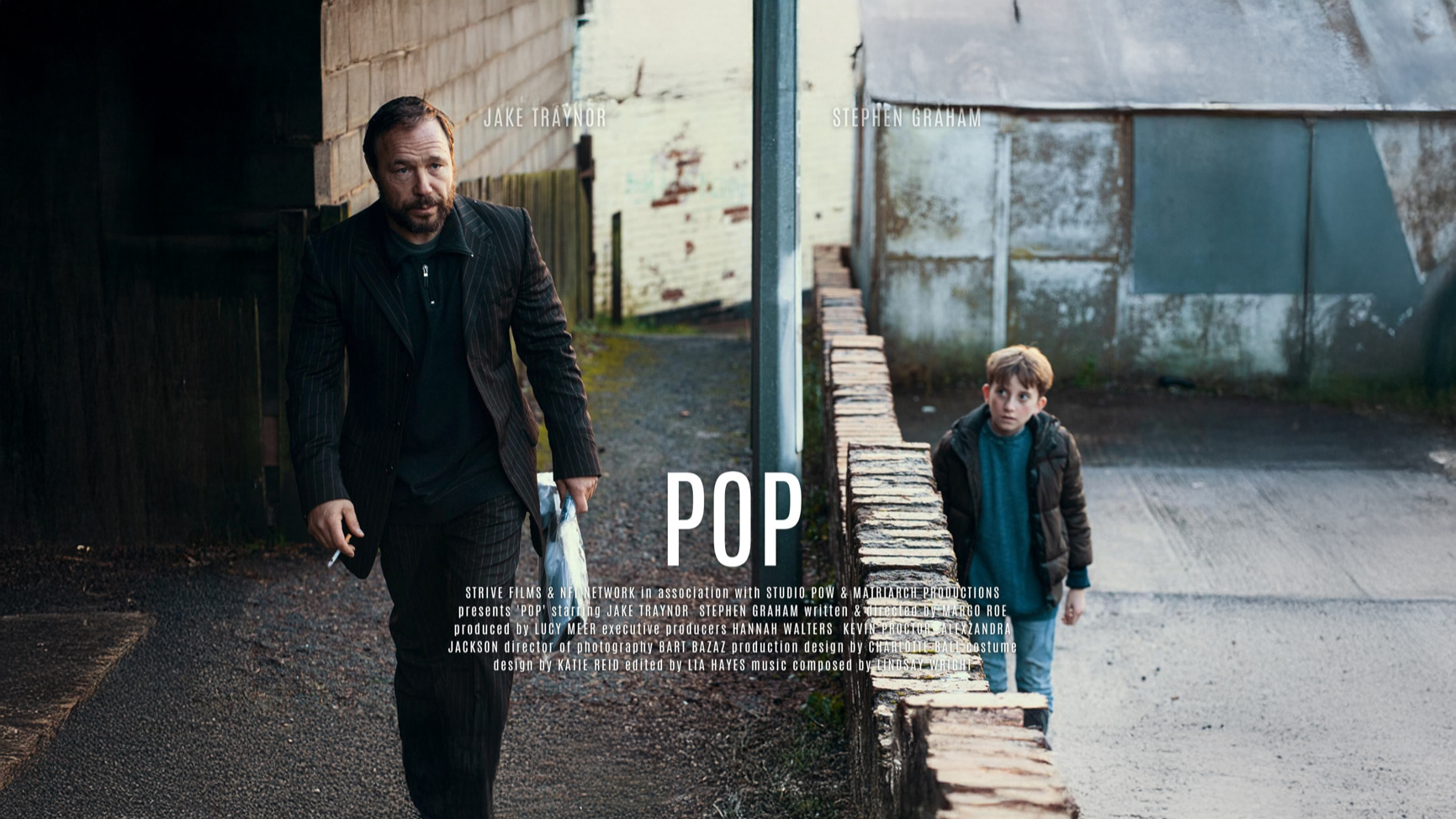
Recently, I watched a short independent film starring Stephen Graham called Pop. It was screened at the Reading Film Festival, where we (at WIDEO.co.uk) were lucky enough to capture some of the energy and enthusiasm of the day.
After the screening, the writer and director, Margo Roe, described her creative process. Over the years, she’d banked little fragments in her memory. Moments, overheard lines, odd encounters. Just waiting for the right story to give them a home. One of those fragments came from a night out years earlier. She’d overheard a man in a pub joking (or perhaps not joking) that his wife annoyed him so much he’d shoot her if he had a gun. The shocking part? The next day, someone really did turn up at the man’s house with a gun to call him out on it.
That real-life moment — strange, tense, and deeply human — stayed with her. Years later, she wrote it into a screenplay, and Stephen Graham played the part of the man with the gun.
It’s a powerful reminder that the best creative sparks don’t come from “idea sessions”. They come from life when you’re paying attention.
The creative takeaway
That, to me, is genius. You don’t have to start in the middle, but you can collect the middles. The raw, unresolved moments of real life that don’t yet have a story attached.
Because when the time comes, those moments, whether funny, awkward, tense, heartbreaking, become the heartbeat of your next piece.
Here’s the bit we forget: they’re the kind of moments you’ll never reach for in a standard creative meeting. In that air-conditioned boardroom, surrounded by biscuits and buzzwords, you default to the familiar. Those safe tropes, the polished “campaign ideas” that sound clever but feel hollow.
The moments that really connect, the gritty, left-field, painfully honest ones, don’t come from brainstorms. They come from a lifetime of quietly watching, listening, and filing things away. That’s your invisible prep.
So when the brief lands and everyone else is reaching for the same clichés, you pull something from your mental archive. Something real. And suddenly, you look like a genius.
Start banking your middles.
Those random, rough, emotionally charged little memories. The ones that don’t fit anywhere yet might just be the scene that changes everything.