2025 Wrap-Up: What Every Marketing Team Learned From Video This Year
And the stuff no one wanted to admit out loud… until this year made it unavoidable.
2025 was the year video stopped pretending to be “content” and finally revealed itself as the beating heart of how brands communicate.
Not because of new tech (though that helped).
Not because AI took over (it didn’t).
But because teams finally understood how audiences actually behave.
Let’s walk through what marketing teams truly learned this year. The honest version.
1. Clarity quietly outperformed cleverness
You could almost hear the collective sigh from marketing teams this year:
“We spent HOW much on that high-concept piece… and the simple version still outperformed it?”
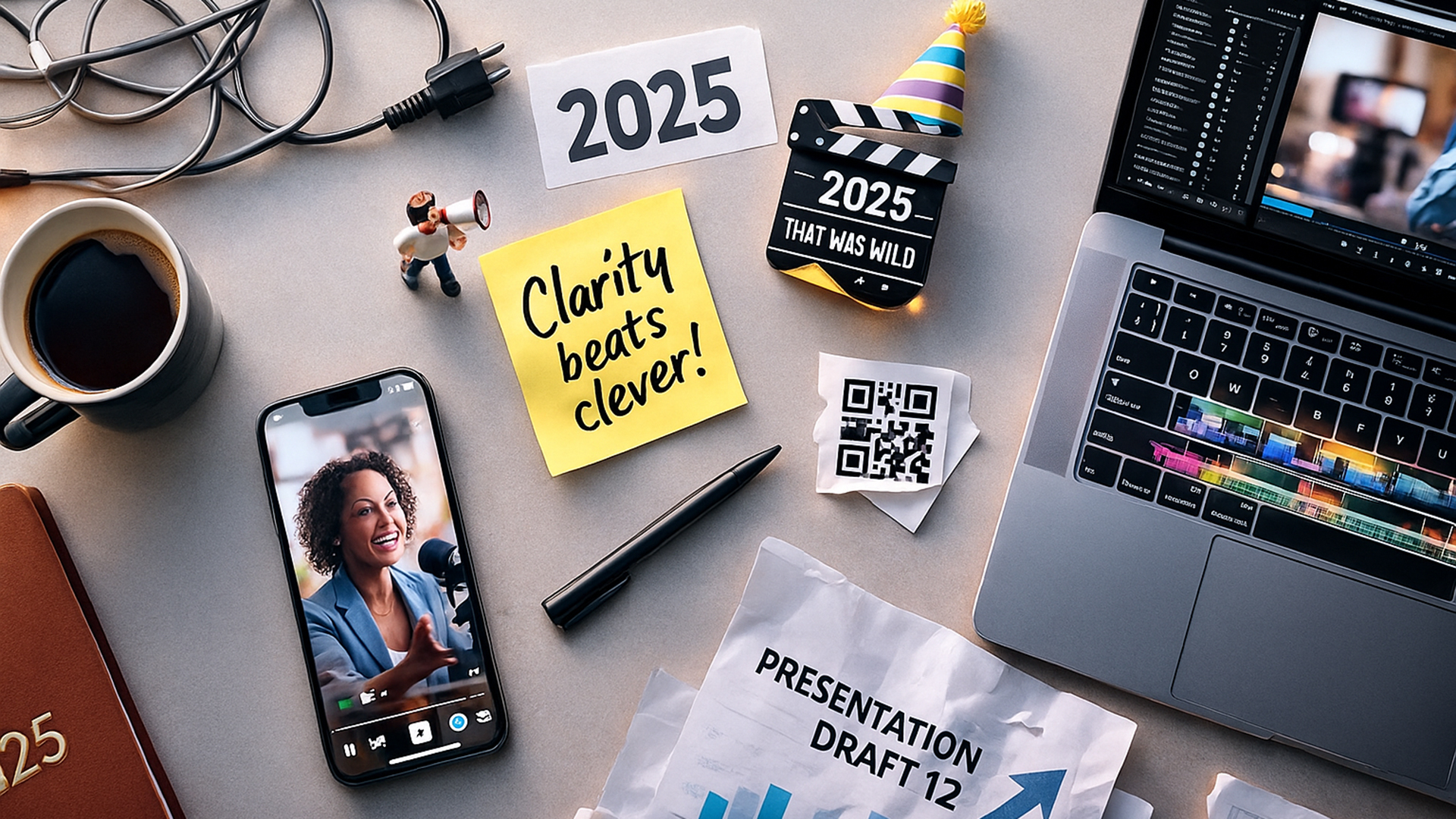
Turns out, audiences aren’t looking for clever.
They’re looking for something they understand instantly.
The brands who embraced clarity suddenly found themselves getting more engagement with half the effort.
It wasn’t the camera tricks.
It was the message finally being allowed to breathe.
2. Short videos pulled people in, but longer stories kept them
Marketers learned something big this year: attention isn’t the problem.
Retention is.
Short-form got the first glance.
But what actually built loyalty, trust, and “I want to work with these people”
were the pieces with depth — the stories, the interviews, the walkthroughs, the honest longer content.
Audiences were happy to stay, as long as the content respected their intelligence.
3. Authentic voices beat corporate scripts (by a landslide)
This was the year more leaders dared to show up as themselves — and audiences rewarded it.
A slightly nervous CEO telling a true story.
A manager sharing something real, not rehearsed.
A founder stumbling, laughing, and continuing.
That’s what people leaned into.
Not the “perfect” reads.
Not the on-brand jargon.
Real tone outperformed perfect delivery almost every single time.
And teams who embraced that felt the shift immediately.
4. Production value turned out to be about consistency, not cost
2025 was a relief for a lot of teams.
They learned the hard way that it’s not the glossy stuff that lands — it’s the consistent stuff.
A recognisable framing.
A clear tone.
Clean audio (honestly, just… clean audio).
A style that feels like them every time.
Once teams had a rhythm, everything became easier.
And ironically, that rhythm made them feel more professional than any big-budget cinematic shoot.
5. The videos that performed were the ones built with purpose
Marketing teams finally stopped asking, “How many views did it get?”
and started asking, “Where did it take people?”
The teams who saw the best results this year were the ones who built videos that nudged viewers forward — to a page, a sign-up, a reflection, a conversation.
Not because they added a CTA as an afterthought.
Because the story itself was designed to lead somewhere.
You could feel the difference instantly.
6. Storytelling became the only true differentiator
AI didn’t kill video.
It killed generic video.
Which meant the only thing left — the only thing audiences still cared about — was story.
Real stories.
Your people.
Your messiness.
Your humour.
Your humanity.
You can’t fake that.
You can’t automate that.
And audiences can smell the difference a mile off.
2025 rewarded honesty more than polish.
It was refreshing.
7. Repurposing became the master strategy (not a hack)
This was the year teams stopped creating “one and done” content.
The smartest teams created once… and let the content work everywhere.
One interview became:
-
a hero video
-
social clips
-
a podcast snippet
-
a blog
-
quote graphics
-
internal comms
-
a mini training piece
-
sales follow-up content
It wasn’t more work.
It was more foresight.
Suddenly, teams with the same budget had ten times the output.
The big shift?
Teams realised they didn’t need to film more.
They needed to think differently about the content they were already creating.
And they needed partners who could help them:
-
simplify their message
-
bring out authentic voices
-
make consistency easy
-
design content with built-in purpose
-
spot stories they were too close to see
-
create assets that travel everywhere
That’s the real lesson of 2025.
2026 will reward the teams who act more like media brands… and less like “content producers.”